
In scoliosis, every case is different, and it is not a regular health problem. It is a condition that can develop anywhere along the spine and significantly varies in severity and type. Whether it’s children or adults, scoliosis can occur in anyone. And while it happens, what’s important is to get the right treatment as soon as possible. Any delay in scoliosis treatment can make the problem more severe. However, before we understand various treatment options, let’s understand the three main types of scoliosis based on the region affected.
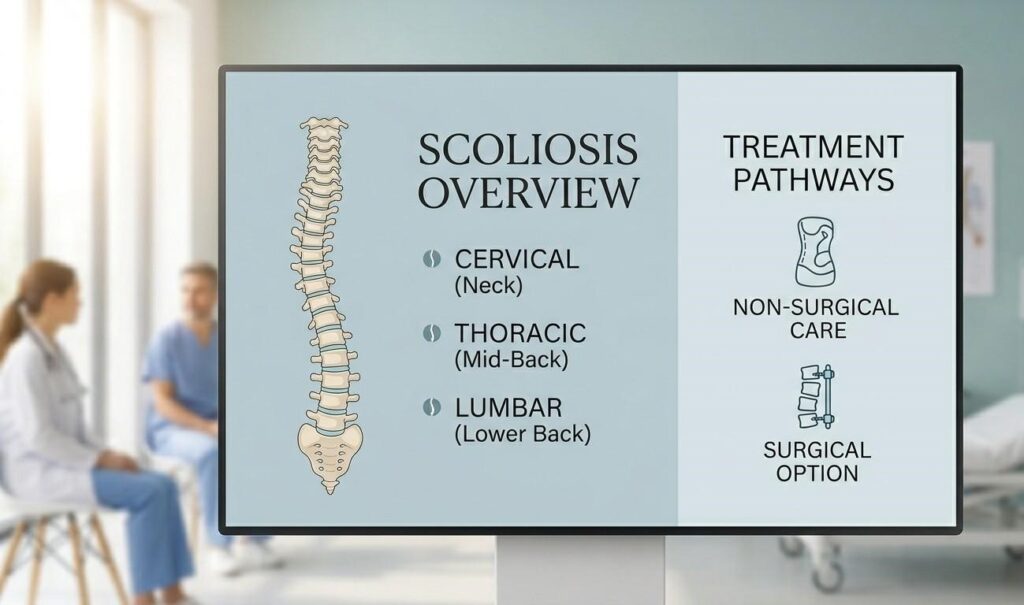
The first type is cervical scoliosis
Cervical scoliosis is one of the rare types of scoliosis that affects the neck region. This condition is often associated with instability in the spine, neuromuscular conditions, and degenerative wear. And while this condition affects the neck’s spine, it causes pain in the neck, tension headaches, and restriction in movement.
The second type is thoracic scoliosis
When scoliosis affects the middle or upper back of the body (which is the rib area), it is called thoracic scoliosis. This scoliosis condition causes the formation of a rib hump that becomes noticeable when bending forward. The common symptoms of thoracic scoliosis are uneven hips, waist, and shoulders. This scoliosis type is quite common and is found among children and adolescents.
The third type is lumbar scoliosis
Lumbar scoliosis is a spinal condition that involves unnatural bending of the spine in the lumbar region. This condition causes pain and discomfort in the lower back. While this scoliosis condition is commonly diagnosed in adults, it can also occur in children. In scoliosis, the spine bends in the lower back, causing immense pain in the back and misalignment in the hips.
Scoliosis Treatment in Toronto: Surgical and Non-Surgical Methods
To treat scoliosis, there are two broad methods: surgical and non-surgical methods. The surgical method for treating scoliosis is mainly designed for scoliosis patients who have severe scoliosis. When the problem is severe and non-surgical methods are not effective enough to treat it, surgery becomes the last option. However, for mild to moderate cases, non-surgical methods such as using scoliobrace, spinecor brace, chiropractic care, and physiotherapy help. The treatment option that is most suitable depends on the condition and the type of scoliosis. Specialists first closely examine the problem and then provide the right guidance to the patient. Also, it’s important to note that non-surgical methods do not entirely treat the problem; they stop the problem from getting worse. From stopping progression in the curve to improving body posture, they help manage pain effectively.
Contact Scoliosis GTA
If you or someone in your loved ones is struggling with scoliosis, then immediately connect with specialists. For scoliosis treatment in Toronto, you can contact us at Scoliosis GTA. Contact today.